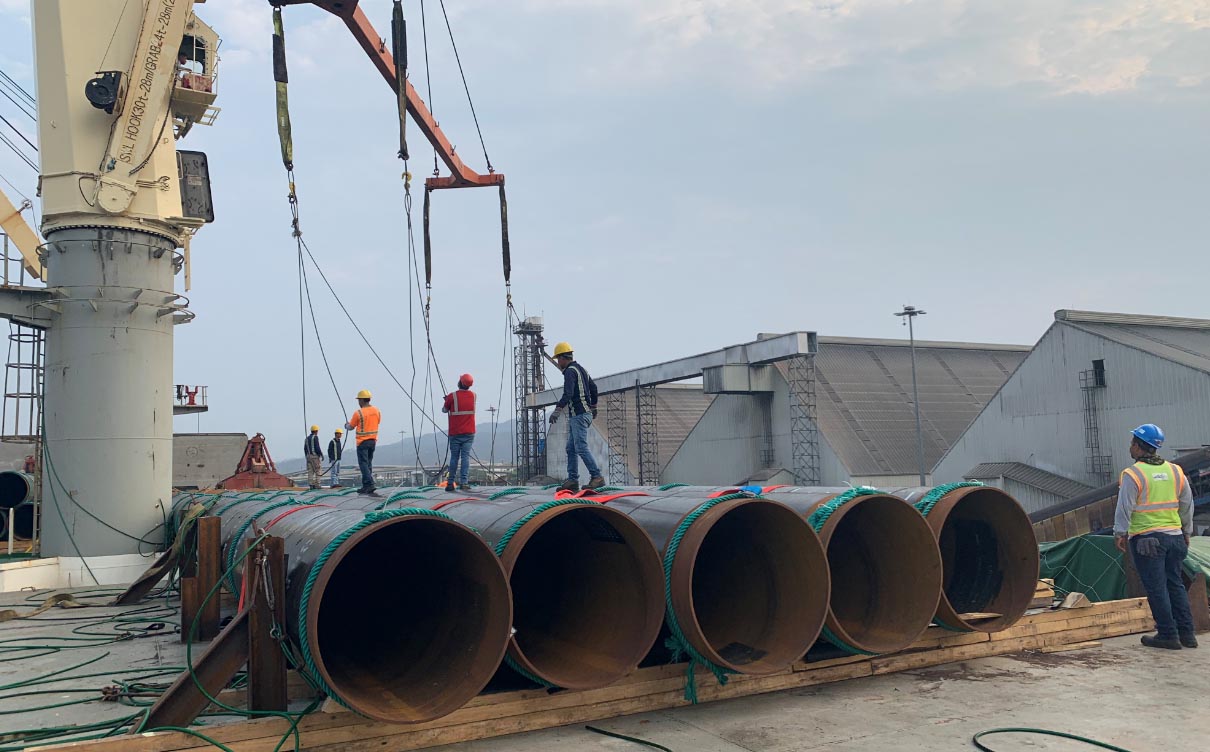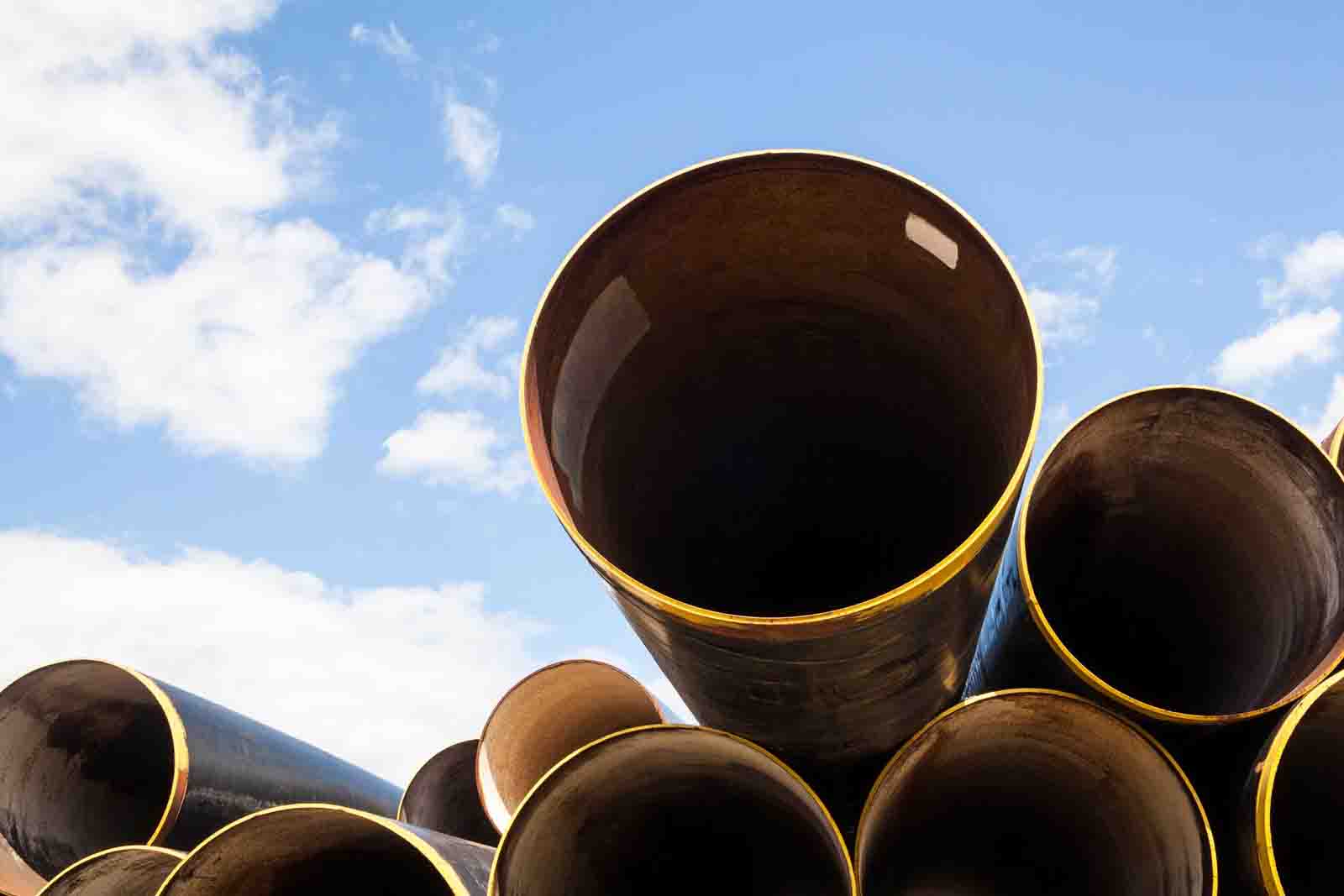
The production of ASTM A36 welded spiral steel pipe represents a delicate intersection between classical metallurgy and modern structural engineering. When we examine the technical profile of this specific material, we aren’t just looking at a hollow cylinder; we are looking at a calculated response to the physical stresses of fluid dynamics, soil pressure, and axial loading.
Why Partner With Our Company?
In a market saturated with generic suppliers, our ASTM A36 spiral pipes stand out due to our commitment to Total Quality Management (TQM).
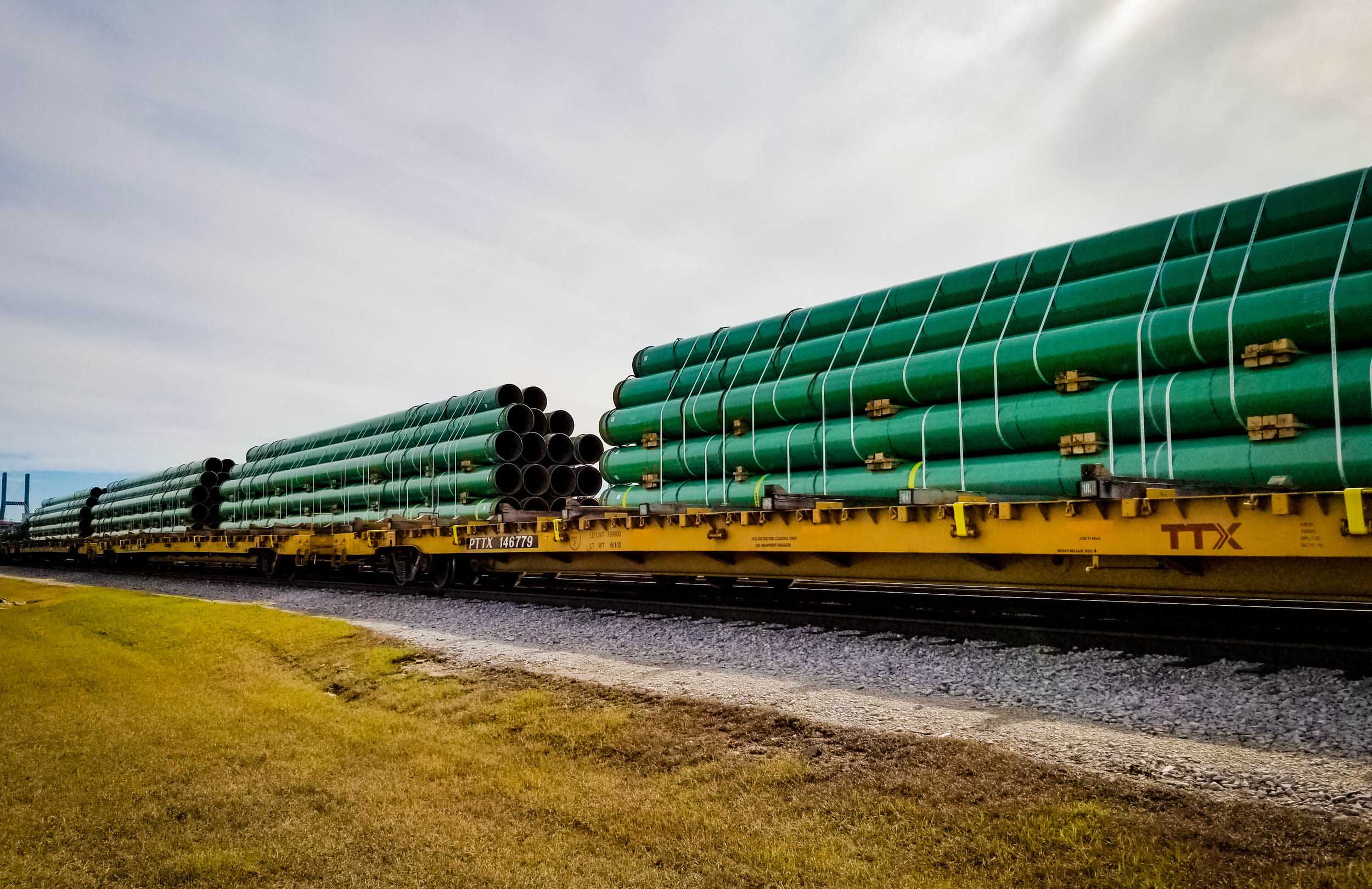
- Custom Coating Solutions: We offer 3PE, FBE, and Coal Tar Epoxy coatings applied in-house to protect your A36 steel from corrosion in aggressive soil or marine environments.
- Precision End Finishing: We provide specialized beveling for field welding, ensuring your installers spend less time grinding and more time joining.
- Traceability: Every single pipe comes with a comprehensive Mill Test Report (MTR), linking the finished product back to the specific heat of steel used at the furnace.
The result is a product that offers the reliability of high-grade steel with the cost-effectiveness of the spiral manufacturing process.
The Metallurgical Foundation: Understanding A36
The choice of ASTM A36 as the substrate for spiral welded pipe is intentional. Unlike high-alloy steels that prioritize hardness at the expense of weldability, A36 is the “workhorse” of the carbon steel world. It is a low-carbon steel that provides a predictable yield point.
The chemistry of A36 is designed to maintain a balance between strength and ductility. For a pipe manufacturer, the “weldability” of the steel is paramount. If the carbon equivalent (CE) is too high, the heat-affected zone (HAZ) around the spiral seam becomes brittle, leading to micro-cracking under hydraulic pressure. Our production process ensures that the carbon content is strictly controlled—typically around 0.25–0.29%—to allow for a smooth transition from the base metal to the weld bead.
The Geometry of the Spiral Seam
Why spiral? When you weld a pipe longitudinally, the seam is subjected to 100% of the hoop stress. However, in a spiral configuration (SSAW), the weld seam is oriented at an angle to the direction of the principal stress. This means the internal pressure isn’t “trying” to unzip the weld as directly as it would in a straight-seam pipe.
Furthermore, the spiral process allows us to produce large-diameter pipes from relatively narrow steel coils. This flexibility is what makes our ASTM A36 spiral pipes the preferred choice for massive municipal water projects and deep-foundation piling.
Technical Parameters and Material Standards
To understand the operational limits of our products, we must look at the specific mechanical properties dictated by ASTM A36 and the dimensional tolerances required for high-pressure applications.
| Property | ASTM A36 Specification | Our Company Standard (Enhanced) |
| Yield Strength (min) | 36,000 psi ($250 \text{ MPa}$) | $265 – 280 \text{ MPa}$ |
| Tensile Strength | 58,000–80,000 psi ($400-550 \text{ MPa}$) | $450 – 580 \text{ MPa}$ |
| Elongation (in 2 inches) | 20% min | 23% min |
| Weld Seam Efficiency | N/A (Project Dependent) | 0.95 – 1.0 (Full Penetration) |
| Straightness Deviation | < 0.2% of total length | < 0.15% of total length |
The Submerged Arc Welding (SAW) Process
Our manufacturing utilizes the double-sided submerged arc welding technique. This is a crucial distinction. By welding both the interior and the exterior of the spiral seam, we achieve a “full penetration” weld.
The flux used in this process serves two purposes: it protects the molten pool from atmospheric oxidation (nitrogen and oxygen embrittlement) and acts as a thermal blanket, slowing the cooling rate. This slow cooling allows for the formation of a fine-grained pearlitic-ferritic microstructure, which is essential for impact resistance in cold-weather environments.
Quality Control: The Non-Destructive Testing (NDT) Protocol
A pipe is only as strong as its weakest inch of weld. In our facility, every ASTM A36 spiral pipe undergoes a rigorous “life cycle” of testing before it leaves the yard:
- X-Ray Radiographic Inspection: We scan the T-joints (where the coil ends meet the spiral seam) to ensure there are no inclusions or porosities.
- Hydrostatic Testing: Every pipe is filled with water and pressurized to $1.5 \times$ its rated working pressure. We monitor the pressure gauge for any “bleed-off” that would indicate a microscopic leak.
- Ultrasonic Testing (UT): A continuous UT scan runs along the spiral seam in real-time during production to detect any lamination in the steel plate or defects in the weld.
Deep Technical Analysis of ASTM A36 Welded Spiral Steel Pipe: Structural Integrity, Manufacturing Kinetics, and Industrial Application
The manufacturing of ASTM A36 Welded Spiral Steel Pipe is a study in the optimization of structural carbon steel. While longitudinal welding has its place, the spiral (helical) submerged arc welding (SSAW) process represents a significant advancement in the ability to produce large-scale infrastructure components with enhanced mechanical properties.
At our facility, we don’t just “roll steel”; we engineer solutions that balance the chemical constraints of the ASTM A36 grade with the geometric demands of high-pressure fluid transport and heavy-load structural piling.
1. Metallurgical Architecture: The A36 Substrate
The foundation of our pipe is the ASTM A36 specification. In the realm of metallurgy, A36 is prized for its weldability and ductility. Unlike high-carbon alloys that are prone to hydrogen-induced cracking during the welding process, A36 maintains a carbon content low enough to ensure a stable heat-affected zone (HAZ).
Chemical Composition and Yield Dynamics
The secret to the longevity of our pipes lies in the precise control of the Carbon Equivalent (CE). A lower CE ensures that the steel does not harden excessively during the rapid cooling phase of the welding process.
The mechanical behavior is defined by the following standard parameters:
- Yield Strength ($F_y$): $36,000 \text{ psi } (250 \text{ MPa})$. This is the stress level at which the steel begins to deform plastically.
- Ultimate Tensile Strength ($F_u$): $58,000 – 80,000 \text{ psi } (400 – 550 \text{ MPa})$.
- Modulus of Elasticity ($E$): Approximately $29,000,000 \text{ psi } (200 \text{ GPa})$.
By utilizing high-quality coils, we consistently produce pipes that exceed these minimums, providing an added “safety buffer” for engineering designs.
2. The Geometry of the Spiral: SSAW Advantages
The spiral welding process involves forming a steel strip into a cylinder such that the direction of the weld forms a helix. This geometry offers several technical advantages over traditional longitudinal seams:
- Stress Distribution: In a pipe, the internal pressure creates “hoop stress” (acting circumferentially) and “longitudinal stress” (acting along the axis). In a spiral pipe, the weld seam is at an angle to these stresses. Specifically, the principal stress does not act perpendicular to the weld, which significantly reduces the risk of catastrophic seam failure.
- Dimensional Versatility: We can produce a wide range of pipe diameters (from $219\text{mm}$ to over $3000\text{mm}$) using the same width of steel strip by simply adjusting the forming angle.
- Enhanced Straightness: The continuous nature of the spiral process results in a product with superior straightness and roundness compared to UOE (U-ing, O-ing, Expanding) longitudinal pipes.
3. Manufacturing Precision & Quality Control
Our production line utilizes Double-Sided Submerged Arc Welding (DSAW). This involves a primary internal weld followed by an external weld. This ensures “full penetration,” meaning the two weld beads overlap perfectly in the center of the pipe wall, eliminating any potential for root gaps.
Technical Specification Table
| Technical Parameter | Standard Requirement (ASTM A36) | Our Production Excellence |
| Yield Strength | $\ge 250 \text{ MPa}$ | $260 – 290 \text{ MPa}$ |
| Tensile Strength | $400 – 550 \text{ MPa}$ | $450 – 580 \text{ MPa}$ |
| Elongation | $\ge 20\%$ | $23\% – 26\%$ |
| Weld Reinforcement | Max $3.2\text{mm}$ | $\le 2.5\text{mm}$ (Smoother Flow) |
| Hydrostatic Test | $P = 2St/D$ | $100\%$ Testing at $1.5 \times$ WP |
| Out-of-Roundness | $\le 1\%$ of Diameter | $\le 0.5\%$ (Easier Field Welding) |
4. Advanced Testing: The Non-Destructive (NDT) Protocol
To guarantee the integrity of every ASTM A36 pipe, we employ a multi-stage NDT regimen:
- Online Ultrasonic Testing: As the pipe is formed, automated sensors scan the weld seam for inclusions, porosity, or lack of fusion.
- X-Ray Radiographic Inspection: Critical areas, particularly “T-joints” where the coil ends meet the spiral, are X-rayed to ensure internal structural perfection.
- Hydrostatic Testing: Each pipe is subjected to high-pressure water testing. This doesn’t just check for leaks; it validates the structural capacity of the steel and the weld simultaneously.
Why Choose Our ASTM A36 Spiral Pipes?
In the global market, many suppliers treat A36 pipe as a commodity. We treat it as an engineered component.
- Precision Forming: Our rolling mills use computerized tensioning to ensure the pipe remains perfectly round. Out-of-roundness makes field welding difficult; our pipes line up perfectly, saving your team hours of labor in the trench.
- Superior Coating Adhesion: We recognize that A36, being a carbon steel, requires protection. We offer specialized surface treatments, including 3PE (Three-Layer Polyethylene) and Fusion Bonded Epoxy (FBE), which bond chemically to the shot-blasted steel surface.
- Scale of Production: Whether you need a standard 400mm diameter or a massive 3000mm structural casing, our spiral mills are calibrated to handle varying wall thicknesses without compromising the integrity of the spiral lead angle.