
Open-Ended Pipe Piles: Why We Leave the Bottom Open (And When It Saves Your Bacon)
By a Field Engineer Who’s Seen Too Many Closed-Toes Fail
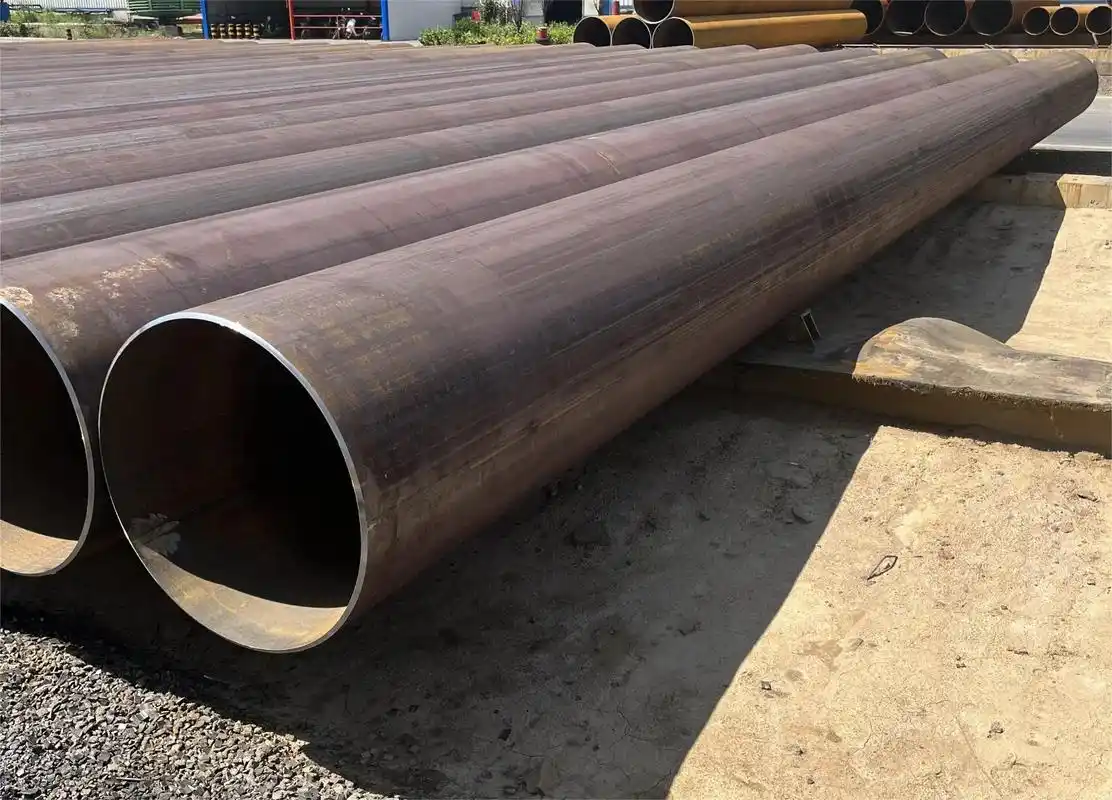
You know, I get this question a lot from young engineers fresh out of school. They’re standing on site, looking at this big steel pipe hanging off the crane, and they see the bottom is just… open. Nothing there. Just a steel cylinder with a sharp edge ready to hit the dirt.
And they always ask the same thing: “Uh… shouldn’t we cap that? Won’t dirt get inside?”
Bless their hearts.
If I had a dollar for every time I heard that question, I’d retire to Florida and never look at another pile driving rig again. But it’s a fair question if you’ve only ever dealt with concrete piles or H-piles. The open-ended pipe pile looks wrong if you don’t understand what it’s actually doing down there.
So let’s set the record straight. Open-ended pipe piles aren’t a design oversight. They’re not a cost-cutting measure where we ran out of steel plate. They’re a deliberate choice—sometimes the only choice—when the ground gets nasty.
And here’s the kicker: sometimes leaving the end open is the difference between a foundation that lasts fifty years and a pile that buckles before it hits refusa
First Things First: What Are We Actually Talking About?
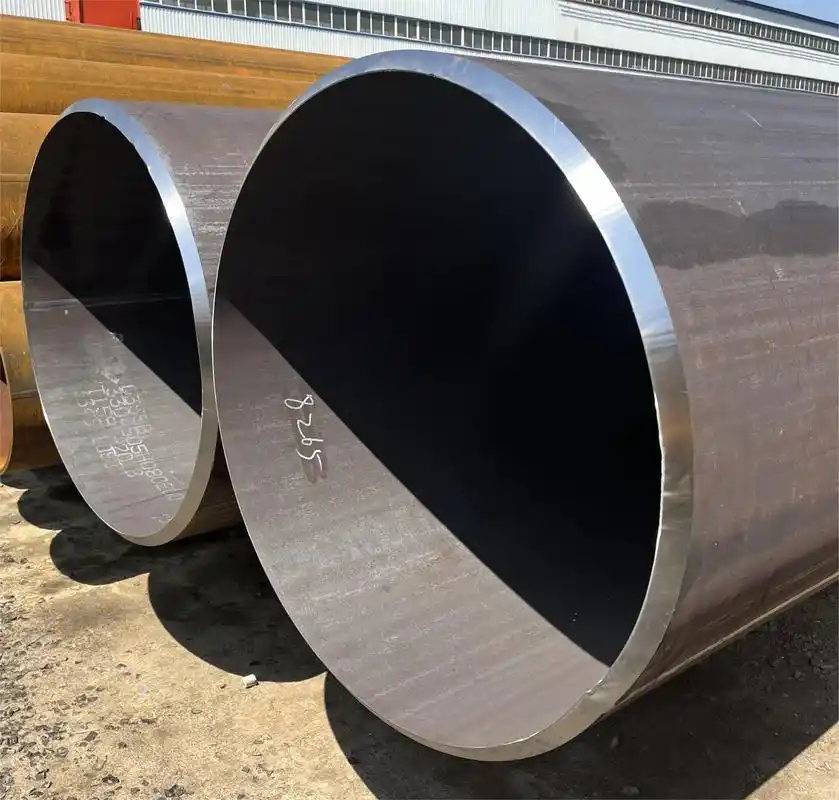
An open-ended pipe pile is exactly what it sounds like. Steel pipe. Driven into the ground. No shoe. No plate. Just a hollow cylinder with a cutting edge at the bottom.
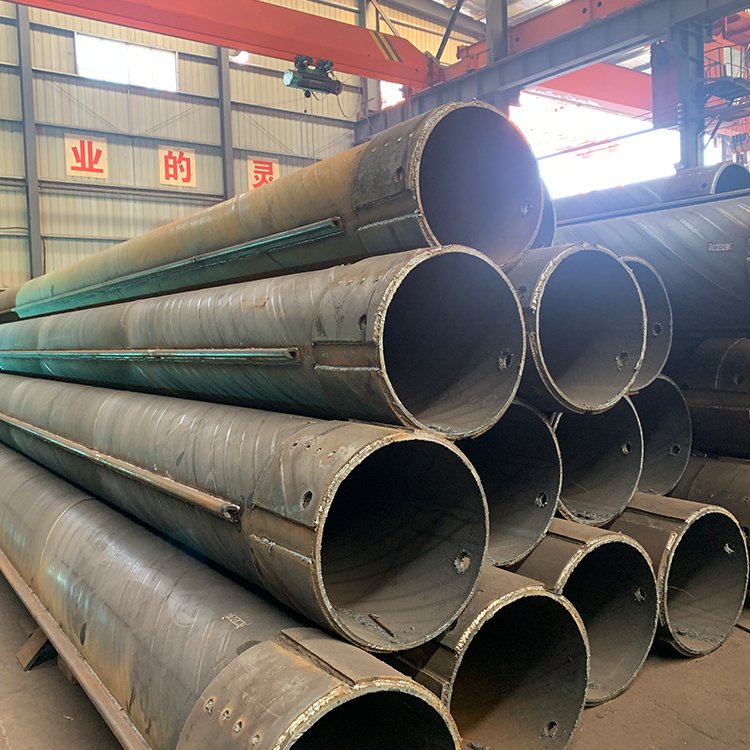
The soil doesn’t get pushed aside like it does with a closed-end pile. Instead, it enters the pipe. Forms a soil plug inside. And that plug—that column of dirt trapped in the steel—becomes part of the structural system.
Simple concept. But the mechanics? That’s where it gets interesting.
The Basic Physics: Why Open vs. Closed Matters
Let’s start with the fundamental difference. When you drive a closed-end pipe (or any solid pile), you’re displacing soil. You’re pushing it out of the way. That takes energy. It creates resistance. It can also heave the ground around you, lift adjacent piles, and generally cause headaches for everyone on site.
Open-ended? The soil has somewhere to go. Inside the pipe.
The governing equation—the one I scribble on coffee-stained notebook pages—looks something like this:
Where:
-
R_outer shaft is the skin friction on the outside of the pipe
-
R_inner shaft is the friction between the soil plug and the inside wall
-
R_annulus is the bearing at the tip (the steel itself, not the plug—just the ring of steel at the bottom)
Notice what’s missing? End bearing on a solid plug. Because initially, there isn’t one. The soil moves up inside as you drive.
But here’s where it gets weird. At some depth, that soil plug stops moving. It jams. It locks up. Now you’ve essentially created a closed-end pile, but the soil inside is stressed, confined, and acting differently than the soil outside.
That moment—when the plug locks—is critical. It determines everything about how the pile behaves under load.
The Soil Plug: Your Uninvited Tenant
I remember a job in Mobile, Alabama back in ’09. We were driving 36-inch open-ended piles for a ship berthing structure. Dense sand, some layers of stiff clay. Textbook conditions for open-ended.
First test pile goes in. We’re monitoring with PDA. Everything looks normal. Then we hit about 45 feet, and the blow counts jump. Not gradually—straight up. Thirty blows per foot becomes a hundred and fifty in the space of three feet.
We pull the hammer, look down the pipe with a light. That soil plug? Solid as concrete. Locked tight. We couldn’t even get a sampling tube through it.
That’s the plugging phenomenon. And it’s why open-ended piles can actually end up with higher capacity than closed-end in some soils.
The plugging ratio—what the academics call the Incremental Filling Ratio (IFR)—is something we track religiously:
If that number drops below 80%? You’re getting plug development. Below 50%? That plug is locked. Below 20%? You’re basically driving a closed-end pile now, whether you intended to or not.
And here’s the thing: a plugged pile behaves differently under load. The load transfers down through the steel, but also through that soil column. The interface friction on the inside mobilizes. You’ve got double the surface area working for you.
Table 1: Open-Ended vs. Closed-Ended Pipe Pile Comparison
| Parameter | Open-Ended | Closed-Ended | My Field Note |
|---|---|---|---|
| Installation Ease | Easier in dense soils | Harder—full displacement | Open-ended punches through; closed-ended fights every inch |
| Ground Heave | Minimal to none | Can be significant | In tight clusters, open-ended saves your survey control |
| Inspection | Can inspect inside after driving | No visual access | Found a void in limestone once by looking down the pipe—saved the job |
| Material Cost | Same pipe, less tip fab | Need plate to close end | Open-ended saves maybe $200 per pile on fab |
| Driveability | Better in obstructions | Worse—hits like a battering ram | Open-ended will sometimes skewer a boulder; closed-ended just stops |
| Capacity Mechanism | Combined friction + plug | End bearing + friction | Both can achieve similar ultimate capacity—just different paths |
| Typical Use | Marine, deep foundations, rock sockets | Onshore, easier ground | If I’m offshore or near water, I’m open-ended nine times out of ten |
When Do We Actually Use Open-Ended?
Scenario 1: Marine Construction (The Classic Case)
You’re building a dock. Or a pier. Or a dolphin for ships to tie up to. You’re in the water. The soil is variable—maybe sand, maybe soft clay, maybe some layers of stiff material. And you can’t see the bottom.
Open-ended is your friend here.
Why? Because you can’t predict exactly what you’ll hit. There might be boulders. There might be old construction debris. There might be a layer of calcareous sandstone that shows up on the boring logs but in reality is fractured and variable.
I drove piles in San Francisco Bay back in the early 2000s. Old industrial area. The borings showed clean sand. What we actually hit? Timber piles from an old pier, chunks of concrete, a car axle (I’m not kidding), and a layer of shell hash that reflected the hammer wave so bad we thought the pile was breaking.
Open-ended pipe sliced through most of that. A closed-end pile? Would’ve stopped cold at the first obstruction.
Scenario 2: Penetrating Dense Layers
Sometimes you need to get through a hard layer to reach bearing depth. Maybe it’s glacial till. Maybe it’s a dense sand stratum. Whatever it is, it’s tough.
Open-ended pipe has a smaller effective tip area. Just the steel annulus. So the driving resistance is lower. You can punch through layers that would stop a closed-end pile cold.
The math is simple enough:
For a 24-inch pipe with 1-inch wall:
- Closed-end tip area = π × (12²) = 452 square inches
- Open-end steel area = π × (12² – 11²) = about 72 square inches
That’s one-sixth the area. One-sixth the end bearing resistance during driving. You’ll drive through that dense layer while closed-end piles are still bouncing the hammer.
Scenario 3: Rock Socketing
This is where open-ended piles really shine.
When you need to socket into rock—drill or drive into bedrock—you want open-ended. Why? Because you can clean out the inside. You can drill through the plug, extend the socket, and actually inspect the rock at the bottom.
I did a job in Kentucky where the bedrock was weathered limestone with solution cavities. Closed-end piles would’ve been a disaster—they’d either stop on a pinnacle or punch through into a void with no warning.
Open-ended? We drove to refusal, then used an airlift to clean out the inside. Shone a light down there. Could see the rock condition, the voids, everything. We even sent a camera down once. That’s not possible with closed-end.
Scenario 4: Displacement-Sensitive Sites
Here’s one the textbooks don’t emphasize enough.
If you’re driving piles close together—like for a mat foundation or a high-density cluster—ground heave becomes a real problem. Closed-end piles displace soil. That soil has to go somewhere. It goes up. It moves sideways. It lifts previously driven piles.
I watched a job in Boston where the contractor used closed-end pipe in a tight grid. Three days later, the first piles were two inches higher than when we drove them. Had to redrive every single one. Cost a fortune.
Open-ended? Minimal displacement. The soil goes inside the pipe. The ground around stays put. Your survey control stays happy. Your client stays happy. You stay employed.
The Failure Modes (And How to Fix Them)
Let’s be honest: open-ended piles aren’t magic. They fail. I’ve seen it. You’ll see it if you do this long enough.
Failure Mode 1: The Rat-Hole
This happens in loose sands or soft clays. The soil plug doesn’t develop. It just keeps running up inside the pipe. You drive fifty feet, and the soil inside is fifty feet deep. No plugging. No inner friction development.
Why it matters: Your capacity is way lower than you calculated. You’re relying only on outer skin friction and maybe a little tip bearing on the steel annulus.
The fix: Stop driving. Let it sit overnight. Sometimes the soil sets up and gains strength. Or—and I’ve done this—pump a low-strength grout plug at the bottom to create an artificial end bearing. It’s a补救措施, but it works.
Failure Mode 2: Sudden Plug Release
Scariest sound in pile driving.
You’re driving along, plug locked, blow counts steady. Then wham—the pile drops six inches with one blow. The plug released. Suddenly you’re fifty blows per foot and then ten. The whole load path changed.
Why it matters: If you don’t catch this on PDA, you’ll think you’ve hit a weak zone. You’ll keep driving. The plug might lock again deeper, but you’ve lost the data correlation. Your capacity estimates are garbage.
The fix: Watch the driving records like a hawk. Sudden drop in blow count? Check the plug level. If it dropped, you’ve had a release. Recalculate everything.
Failure Mode 3: Buckling During Driving
This one’s rare with heavy wall pipe, but I’ve seen it with thinner walls in very dense soil.
The pile is open-ended. The soil plug locks. Now you’re driving a closed-end pile effectively, but the wall is thin. The driving stresses concentrate at the tip. Boom—local buckling.
The fix: Heavier wall at the tip. Drive shoes. Or switch to a smaller hammer. Sometimes the problem isn’t the pile—it’s the contractor trying to drive too fast with too much energy.
Table 2: Typical Open-Ended Pipe Pile Applications by Region
| Region | Common Application | Soil Conditions | Why Open-Ended Works |
|---|---|---|---|
| Gulf Coast (USA) | Marine docks, fender systems | Soft clays, sands, occasional shell layers | Variable conditions; need to penetrate shell without stopping |
| Pacific Northwest | Bridge foundations, seismic retrofits | Glacial till, cobbles, dense sands | Can punch through cobbles that would destroy closed-end tips |
| Southeast Asia | Reclamation projects, port facilities | Loose sands, coral fragments | Coral is brutal on closed-end—open-ended cuts through |
| Great Lakes | Mooring dolphins, breakwaters | Stiff clays, bedrock near surface | Easy to clean out for rock sockets |
| Middle East | Offshore platforms, jetty structures | Calcareous sands, weak sandstone | Calcareous materials degrade with driving—open allows inspection |
The Inspection Problem (And Why It Matters)
Here’s something nobody talks about in the design office.
With closed-end piles, you’re flying blind. You have no idea what’s happening at the tip. Did it hit something? Is it damaged? Is it bearing on a boulder instead of bedrock? Good luck figuring that out.
Open-ended gives you options.
I always spec open-ended for critical piles because I can inspect after driving. Drop a light. Send a camera. Measure the plug. Sample the material at the bottom.
In Miami, we had a project where the spec called for rock sockets. Contractor drove closed-end test piles. Static load tests passed. Great. Then production started, and suddenly piles were failing at half the test load.
Turns out, the limestone had solution cavities. Some piles were bearing on a thin crust with void underneath. Closed-end couldn’t tell us that. Open-ended? We’d have seen the cavity when we cleaned out the plug.
We made them switch. Cost overruns. Lawsuits. The whole mess. All because someone wanted to save a few bucks on fabrication.
The Grumpy Engineer’s Rules for Open-Ended Pipe Piles
After thirty years, I’ve got some rules. They’re not in the codes. They’re not in the textbooks. But they’ll keep you out of trouble.
Rule 1: When in doubt, leave it open.
Unless you have a compelling reason to close the end—like you need end bearing on a hard layer immediately and can’t risk plugging—just leave it open. You have more options later. You can always grout the inside. You can always drive a mandrel. You can always add a plate after driving if you really need closed-end behavior. But you can’t un-close a closed-end pile.
Rule 2: Monitor the plug.
Every ten feet, check the plug level. Mark the inside with a weighted tape. Know what your plug is doing. If it’s not developing, adjust your capacity estimates. If it’s locking early, expect higher driving stresses.
Rule 3: Don’t trust the boring logs.
They’re a guess. An educated guess, but still a guess. Open-ended piles handle the surprises better. When the log says “sand” and you hit boulders, you’ll be glad the end is open.
Rule 4: Clean it out if you need end bearing.
If you’re relying on end bearing in rock or dense material, clean the plug. Drill it out. Air-lift it. Don’t assume the plug will transfer load forever. In cyclic loading—like in seismic areas or marine environments—that plug can loosen over time.
Rule 5: Consider the corrosion.
Inside matters too. Open-ended piles have interior surface area that’s exposed to air, water, or soil. In marine environments, that interior can corrode faster than the outside. I’ve seen 1-inch wall pipe turn into swiss cheese inside because nobody thought about the inside corrosion. Coat the inside if you can. At least think about it.
Recent Trends: What I’m Seeing in 2024-2025
The industry’s changing. Slowly, but it’s changing.
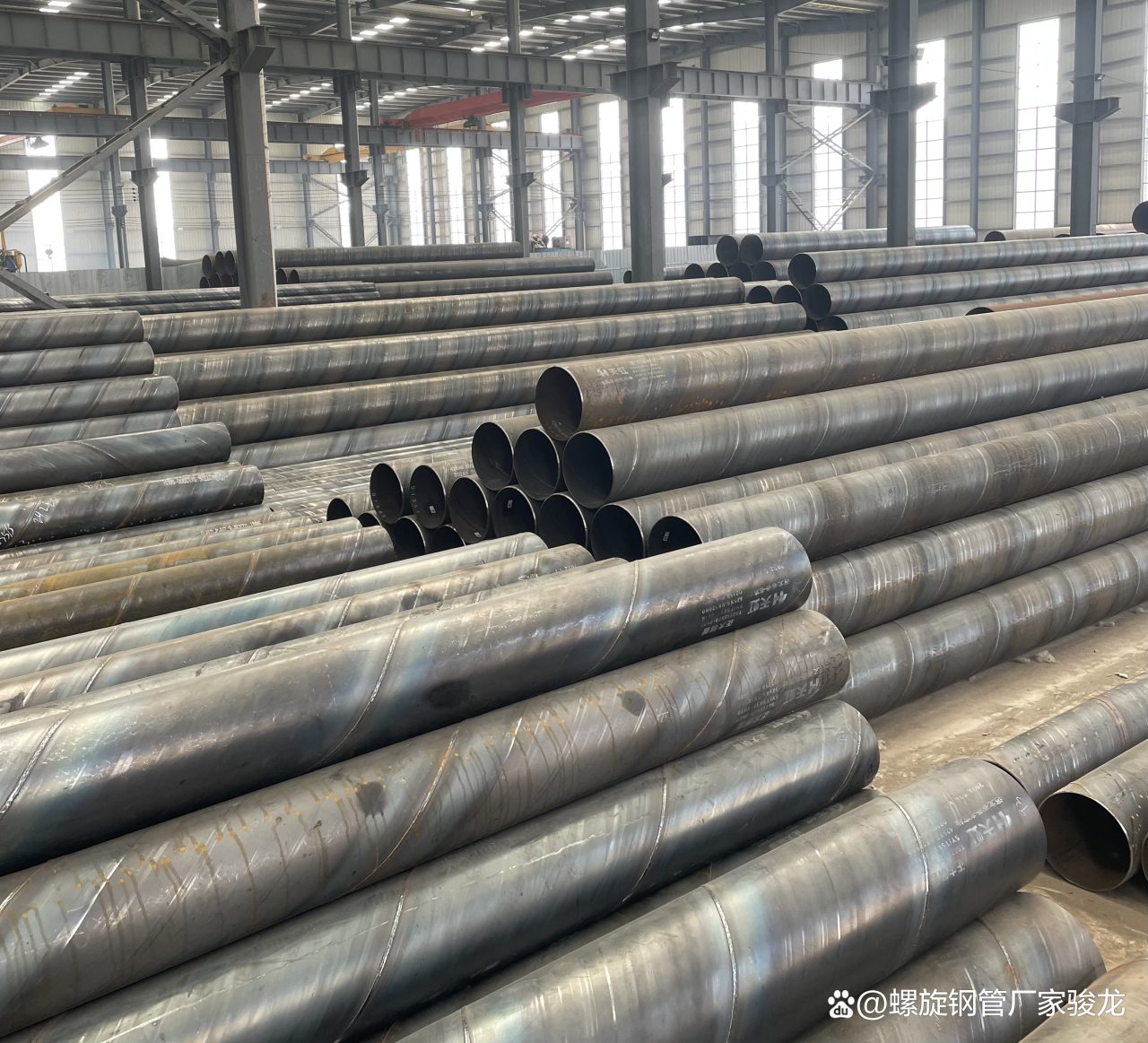
Larger diameters are becoming common. I’m seeing 60-inch and 72-inch open-ended piles now for offshore wind foundations. The mechanics are the same, but the scale changes everything. That soil plug weighs tons. Cleaning it out requires serious equipment.
Monitoring is getting smarter. We’re using fiber optics now—strain gauges along the length, inside and out. Watching how the plug loads the pile in real-time. The data is incredible. We’re learning that our old assumptions about plug behavior were sometimes wrong.
Hybrid systems are appearing. Drive an open-ended pile, clean it out, insert a reinforcement cage, and fill with concrete. You get the driveability of open-ended steel with the capacity and corrosion resistance of concrete. Smart. I like it.
Environmental regulations are tightening. In some areas, you can’t drive closed-end piles anymore because of the ground displacement. Too much risk to adjacent structures. Open-ended is becoming mandatory in urban infill projects.
The Case Study That Keeps Me Humble
Let me tell you about a job that almost ended me.
New Orleans. 2017. Floodwall replacement. Spec called for 24-inch closed-end pipe, 80 feet deep, battered piles for lateral resistance. Standard stuff.
First day of driving, the very first pile hits refusal at 40 feet. Can’t move it. Hammer’s bouncing. We pull it—tip is crushed. Bent inward like a soda can.
Turns out, there was a buried concrete mattress from an old levee repair. Nobody knew about it. No historical records. No mention in the geotech report. Just random concrete at 38 feet.
We switched to open-ended. Drove right through it. The open end cut into the concrete, fractured it, pushed pieces aside. Soil went inside. We cleaned it out later, drove another ten feet into the native clay, and passed the load test with flying colors.
If we’d stuck with closed-end? We’d still be out there, probably, beating our heads against concrete and wondering why we chose this profession.
The Numbers: Quick Reference
Typical Dimensions I Use:
- Wall thickness: Minimum 0.5″ for 24″ diameter, scale up with size
- Tip bevel: 30-45 degrees on the outside, leaves inside square
- Splices: Full penetration butt welds, sometimes with backing rings
Capacity Estimates (Rough—Don’t Build Without Analysis):
For a 24″ × 0.5″ open-ended pile in dense sand:
- Outer skin: 2-3 kips per foot
- Inner skin (if plugged): 1-2 kips per foot
- Tip (steel only): 50-100 kips depending on density
- Total ultimate: 300-500 kips typical
For the same pile closed-ended, you might get 400-600 kips, but you’ll never drive it as deep. Trade-offs everywhere.
The Bottom Line
Open-ended pipe piles exist because the ground isn’t a textbook. It’s messy. It’s unpredictable. It hides boulders and old car axles and concrete chunks from projects fifty years ago.
Leaving the end open gives you options. You can drive through stuff that would stop a closed-end pile. You can inspect after driving. You can clean out and socket into rock. You can grout for extra capacity. You can do all of it, or none of it, depending on what you find down there.
Are they right for every job? No. If you’ve got clean soil conditions, good bearing layer at consistent depth, and no inspection concerns, closed-end might be simpler and cheaper.
But if you’re working in unknown ground—and let’s be honest, when do you really know the ground?—open-ended is the safer bet. It’s the difference between guessing and knowing. Between hoping the pile’s okay and actually seeing it.
And in this business, I’ll take seeing over hoping every single time.
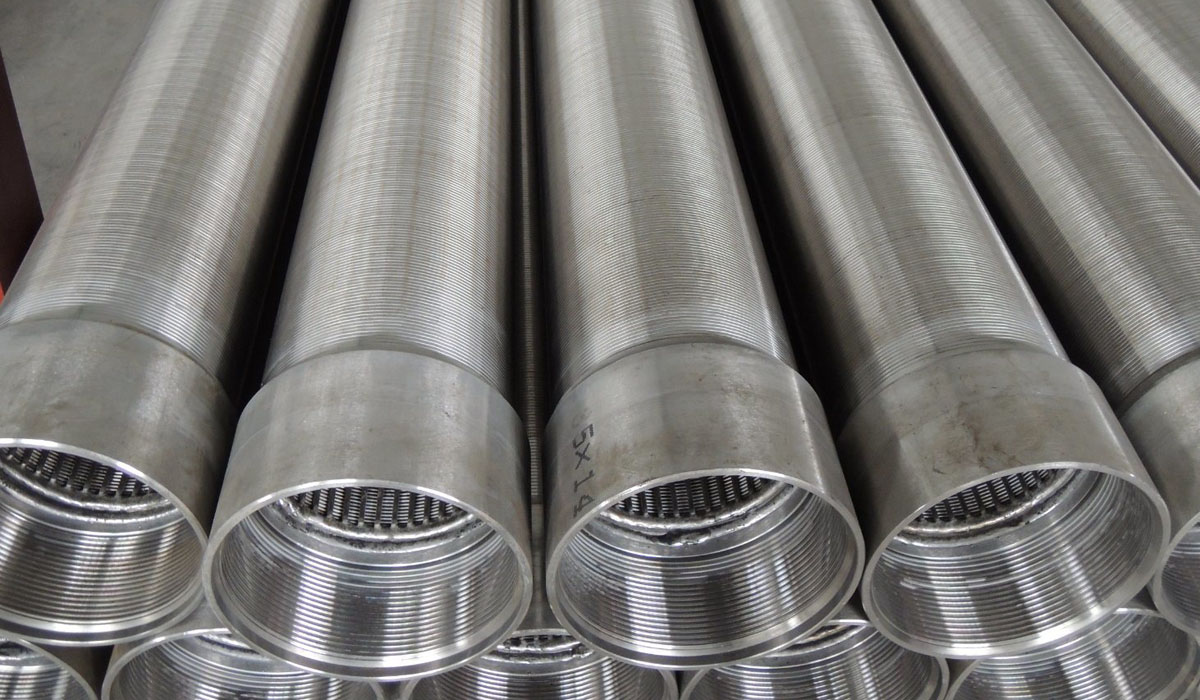
The water well screen is an important component of a well that allows water to flow into the well while preventing sediment and other debris from entering. The screen is typically located at the bottom of the well, near the aquifer. This is done to ensure that only clean water is collected and that any sediment or dirt is filtered out. The screen is typically made from a perforated pipe or other type of material that has small openings to allow water to pass through while blocking sediments from entering. Abter well screen is manufactured with a continuous v-shaped slot to reduce the entrance velocity of water and encrustation rates. Besides, Filson well screen has a large surface area without clogging, thus provide superior filtration performance. Well screen slot size selection is a critical step, typically based on the particle size analysis of the formation sample. With the standard slot size range from 0.005” to 0.5”, Filson well screen can control sand particles and silt from the well perfectly. Advantages of Water Well Screens 1. The V-shape section plane of water well screens creates the continuous slot, which can avoid blockage and make sure of the unimpeded water. Read more
PARAMETER Geothermal Pipe based well screen specification: Nominal Diameter Pipe OD(mm) Weight lb/ftW.T[mm] Hole size In Holes per foot Total Areaofholes in2/ft Screen OD (in) 2-3/8 60 4.6[4.83] 3/8 96 10.60 2.86 2-7/8 73 6.4[5.51] 3/8 108 11.93 3.38 3-1/2 88.9 9.2[6.45] 1/2 108 21.21 4.06 4 101.6 9.5[5.74] 1/2 120 23.56 4.55 4-1/2 114.3 11.6[6.35] 1/2 144 28.27 5.08 5 127 13[6.43] 1/2 156 30.63 5.62 5-1/2 139.7 15.5[6.99] 1/2 168 32.99 6.08 6-5/8 168.3 24[8.94] 1/2 180 35.34 7.12 7 177.8 23[8.05] 5/8 136 42.16 7.58 7-5/8 194 26.4[8.33] 5/8 148 45.88 8.20 8-5/8 219 32[8.94] 5/8 168 51.08 9.24 9-5/8 244.5 36[8.94] 5/8 188 58.28 10.18 10-3/4 273 45.5[10.16] 5/8 209 64.79 11.36 13-3/8 339.7 54.5[9.65] 5/8 260 80.60 14.04 What is Geothermal Well Screen? Geothermal well screens are an essential component of a geothermal well system. They are used to filter and protect the geothermal well from debris and other contaminants that can be harmful to the system. Sand Control Screens are designed to be durable and reliable, providing long-term protection for the well. The geothermal well screen is a cylindrical tube made of a perforated metal or plastic material. The perforations are designed to allow Read more
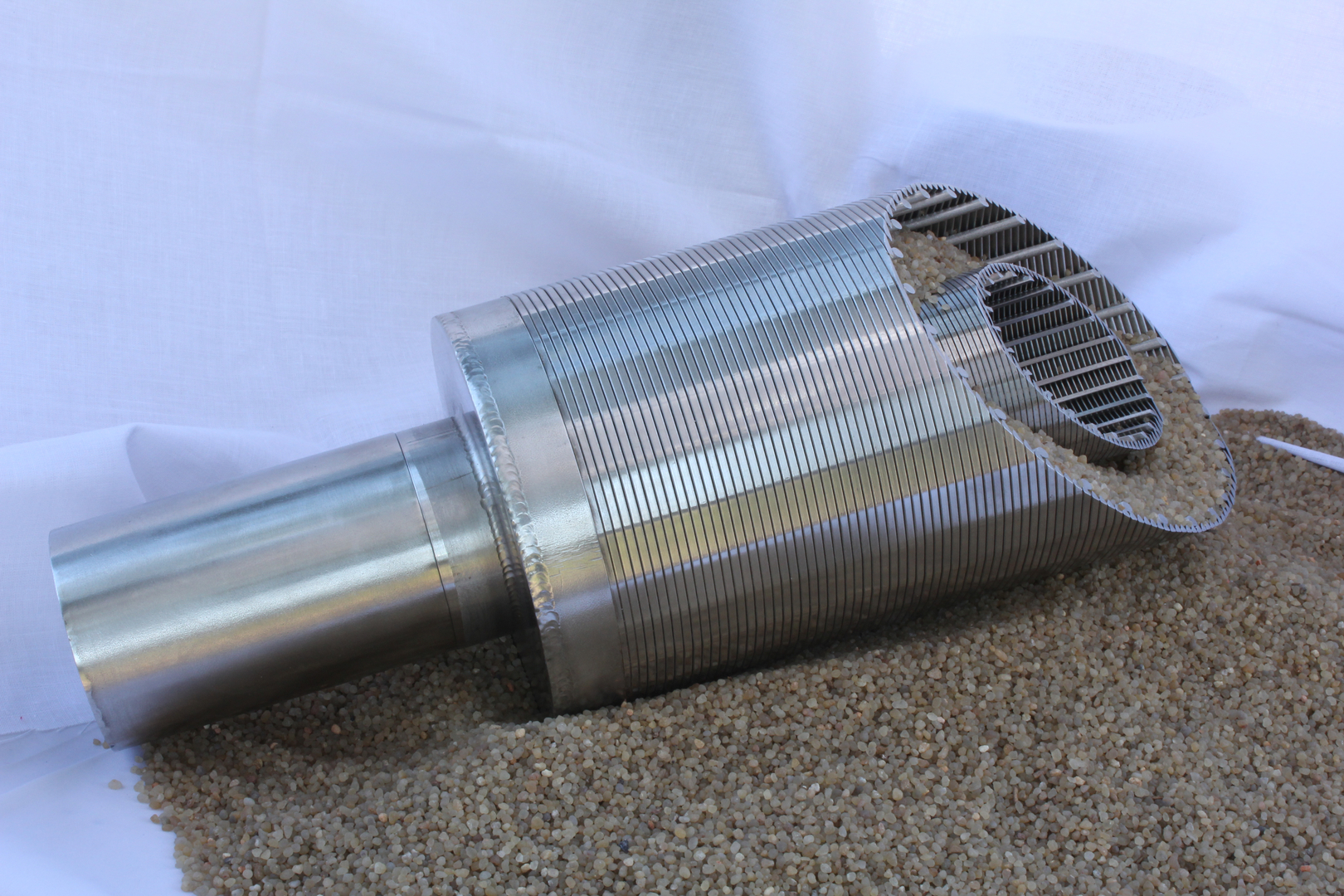
Pre Packed Sand Screen contains perforated base pipe, inner and outer screen jackets and graded sand between the jackets. It is a modification of wire wrapped screen which is used in well sorted sand or stand-alone completion. Graded sand, with or without resin coating, is considered as a filter for reservoir particles. Wire wrapped pre Pre Packed Sand Screen is used in wells where conventional gravel packing is not feasible or economical. The thickness of gravel layer can be varied to meet special requirement. What Is the Function of Gravel Pack? Gravel packing is one of popular sand-control technique used in oil, water and gas wells. It stabilizes the borehole and filters the sand from the flow, only allowing very fine particles in. Pre Packed Sand Screen wire wrapped sand screen brings it into full play in maximizing production as well as controlling the sand. Diameter: 168mm Material: stainless steel,carbon steel,etc Slot: 0.2mm End Connection: thread,coupling,etc thickness: 10mm Pre Packed Sand Screen PRODUCT SPECIFICATIONS Base Pipe Gravel Pack Perforations Screen OD (in.) ID (in.) Weight (lbs.) Coupling OD (in.) Thickness (in.) Size (in.) Holes/ft. OD (in.) Cylinder Area (sq. in./ft) 006 GA Inlet Area (sq. in./ft) 1.9 1.61 2.75 Read more
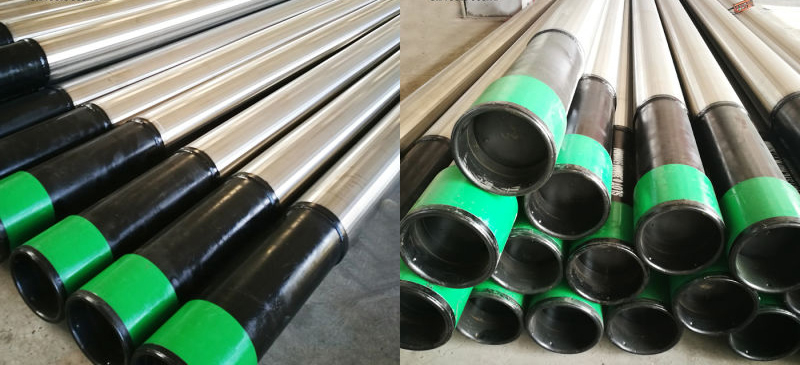
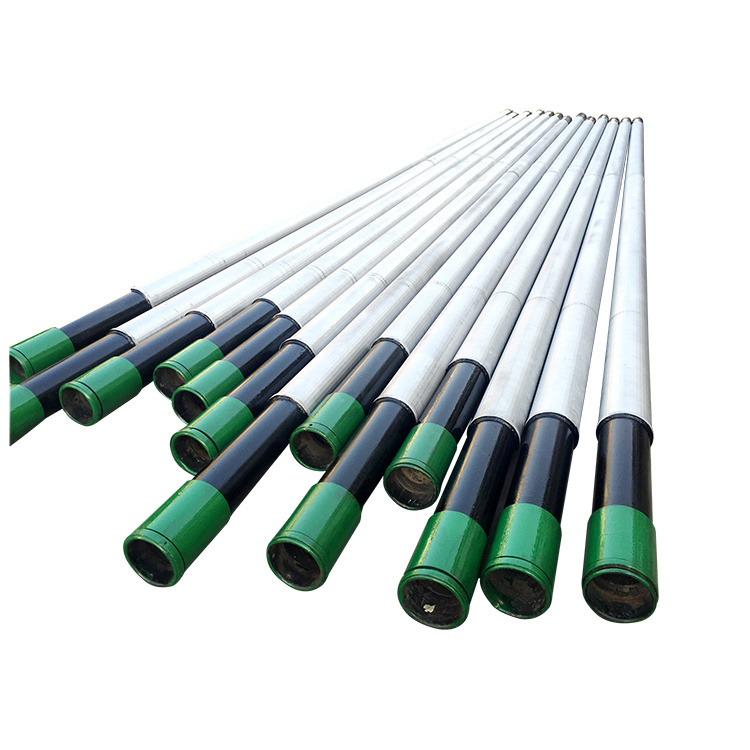
1. Grade: SUS 304 SUS304L, SUS316, SUS316L, or carbon steel 2. Slot Size: 0.02mm~15mm 3. Standard: DIN AISI ASTM 4. Certification: ISO9001, API 5CT 5.Pipe based well screens consist of base pipe,all-welded wedge wire screen and supporting rod.The base pipe is perforated or slotted API casing pipe,the base pipe can be stainless steel or carbon steel API 5CT casing.The all-welded wedge wire screens are welded together with base pipe by supporting rod. 6.Features of Pipe Based Well Screens: 1)Higher filtering accuracy: all-welded wedge wire screens as screen jacket with vee opening design makes the filtering accuracy higher,which can control sand better. 2)Excellent strength and resistance to deformation: The base pipe inside,the outside can be protected with the protection jacket added according to requirements,the integrated strength of the perforated base pipe only decreases 2~3% compared with the standard casing/oil tubing,so the pipe based well screens have enough integrated strength to resist to the pressure caused by strata.Even if some part of the well screens deformed,the slot of this part will not be widened,which makes higher sand controlreliability 3)More choices: the material of screen jacket can be stainless steel or carbon steel,the material can be chosen as per customers'requirement. 4)The smaller slot Read more
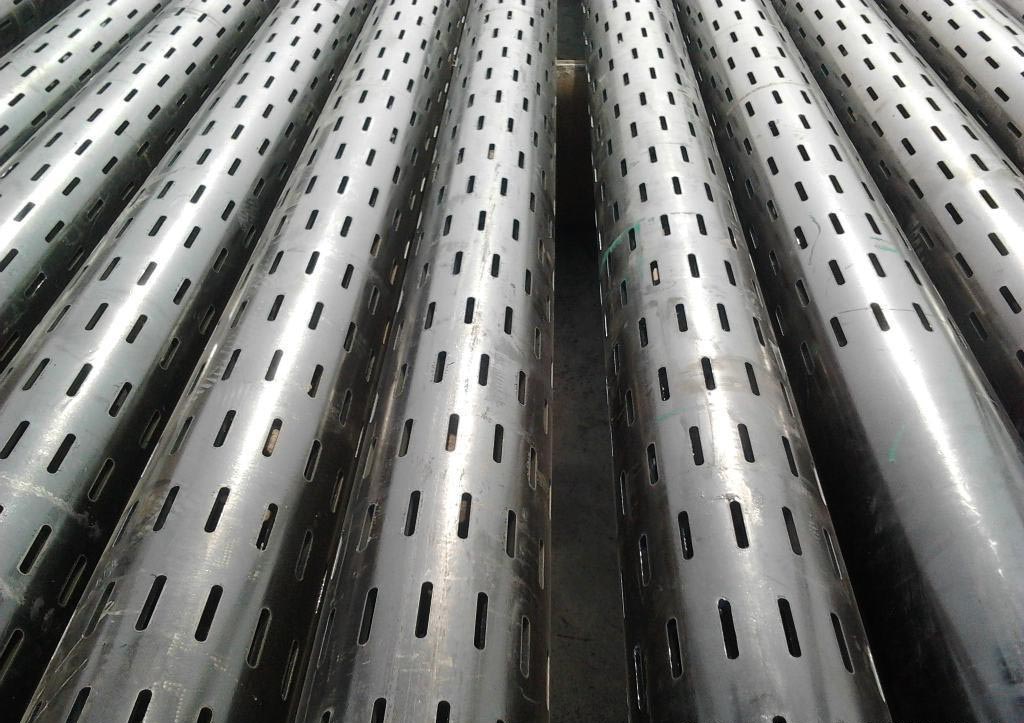
1. Introduction of Slotted Casing Pipe Casing pipe is a large-diameter pipe that serves as the structural retainer for the walls of oil and gas wells, or well bore. It is inserted into a well bore and cemented in place to protect both subsurface formations and the wellbore from collapsing and to allow drilling fluid to circulate and extraction to take place. Slotted casing pipe is a type of casing pipe that has slots machined into its surface. These slots are used to help control the flow of water, oil, and gas in a well bore. The slotted casing pipe is designed to allow water, oil, and gas to flow through the slots while preventing sand and other debris from entering the well bore. Slotted casing pipe is commonly used in oil and gas wells, water wells, and geothermal wells. 2. Types of Slotted Casing Pipe There are two main types of slotted casing pipe: open slot and perforated slot. Open slot casing pipe has slots that are cut into the surface of the pipe in a straight line. These slots are usually spaced evenly apart and are typically about 1/4 inch wide and 1/4 inch deep. Perforated slot Read more
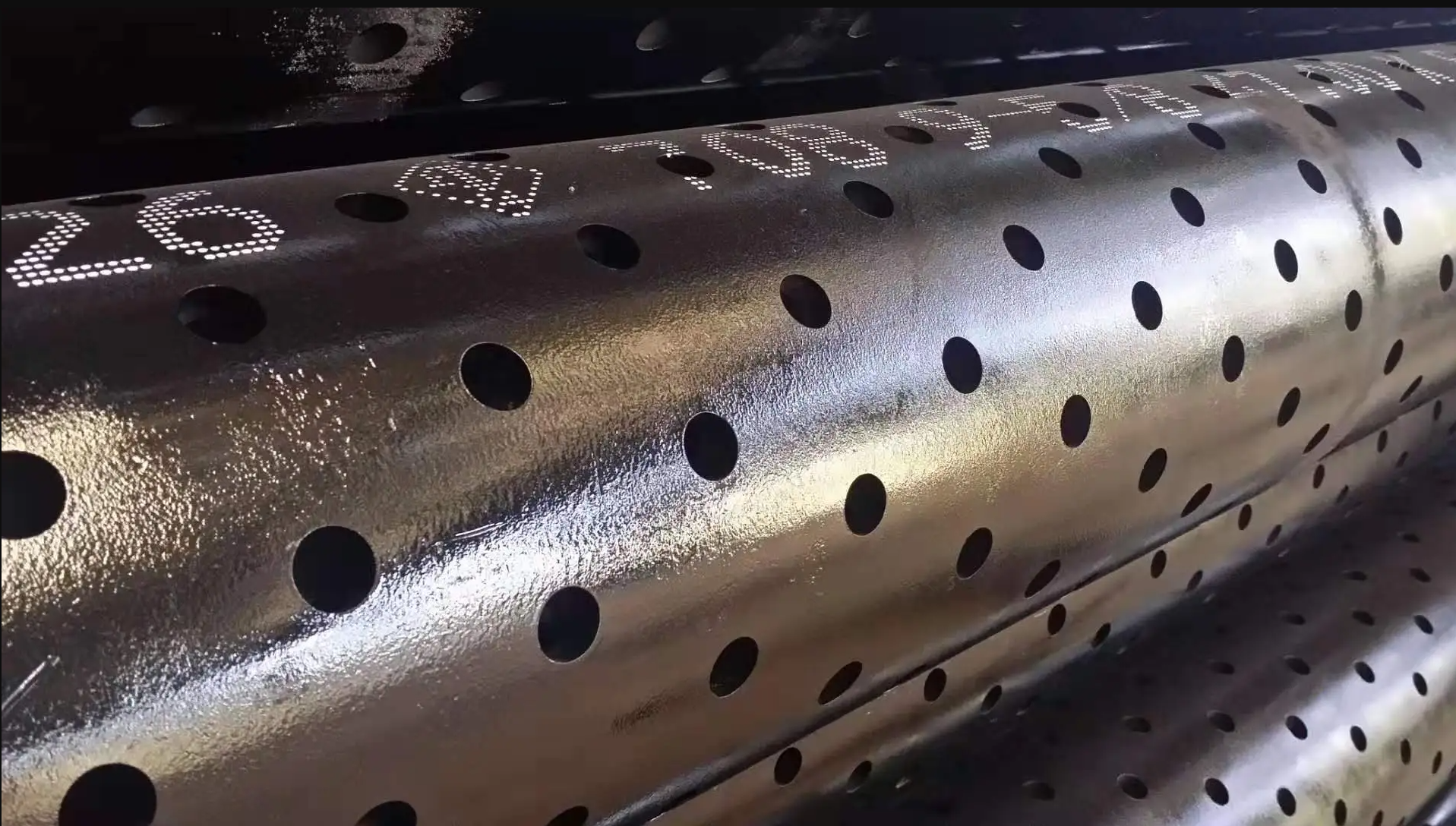
Applications of Perforated Pipe: Perforated well screen is a type of filter used in oil and gas wells. It is designed to control the flow of oil and gas from the well, while preventing sand and other debris from entering the well. perforation in the context of oil wells refers to a hole punched in the casing or liner of an oil well to connect it to the reservoir. Creating a channel between the pay zone and the wellbore to cause oil and gas to flow to the wellbore easily. In cased hole completions, the well will be drilled down past the section of the formation desired for production and will have casing or a liner run in separating the formation from the well bore. The final stage of the completion will involve running in perforating guns, a string of shaped charges, down to the desired depth and firing them to perforate the casing or liner. A typical perforating gun can carry many dozens of explosive charges. Commonly, perforation guns are run on E-line as it is traditional to use electrical signals from the surface to fire the guns. In more highly deviated wells, coiled tubingmay be used. Newer technologies Read more
