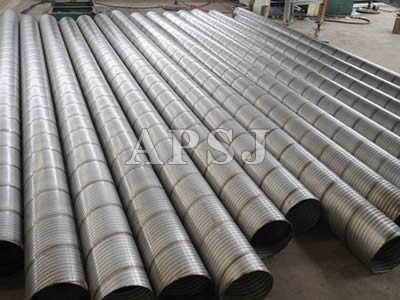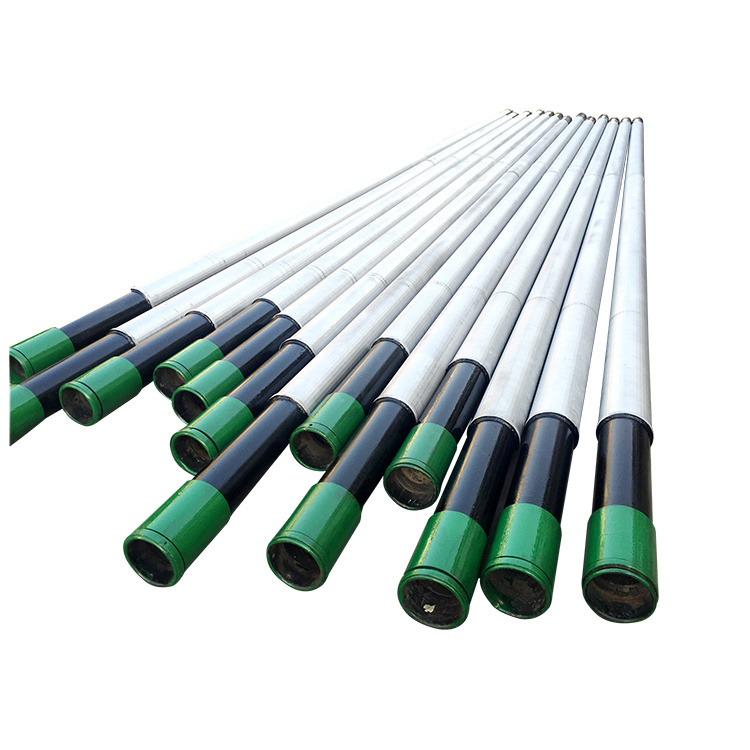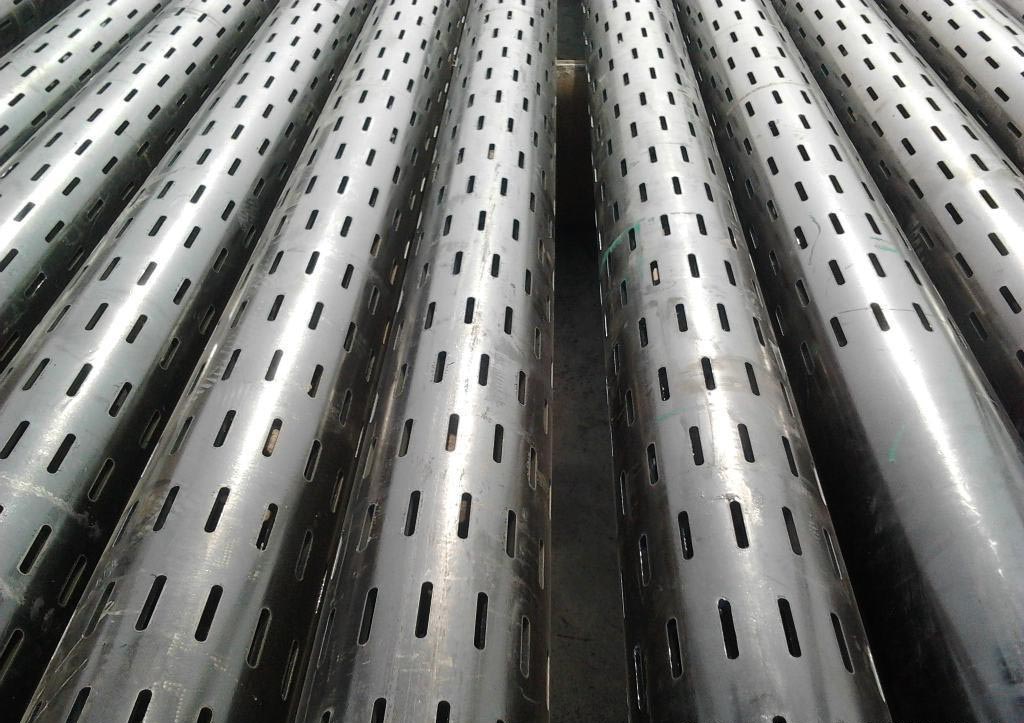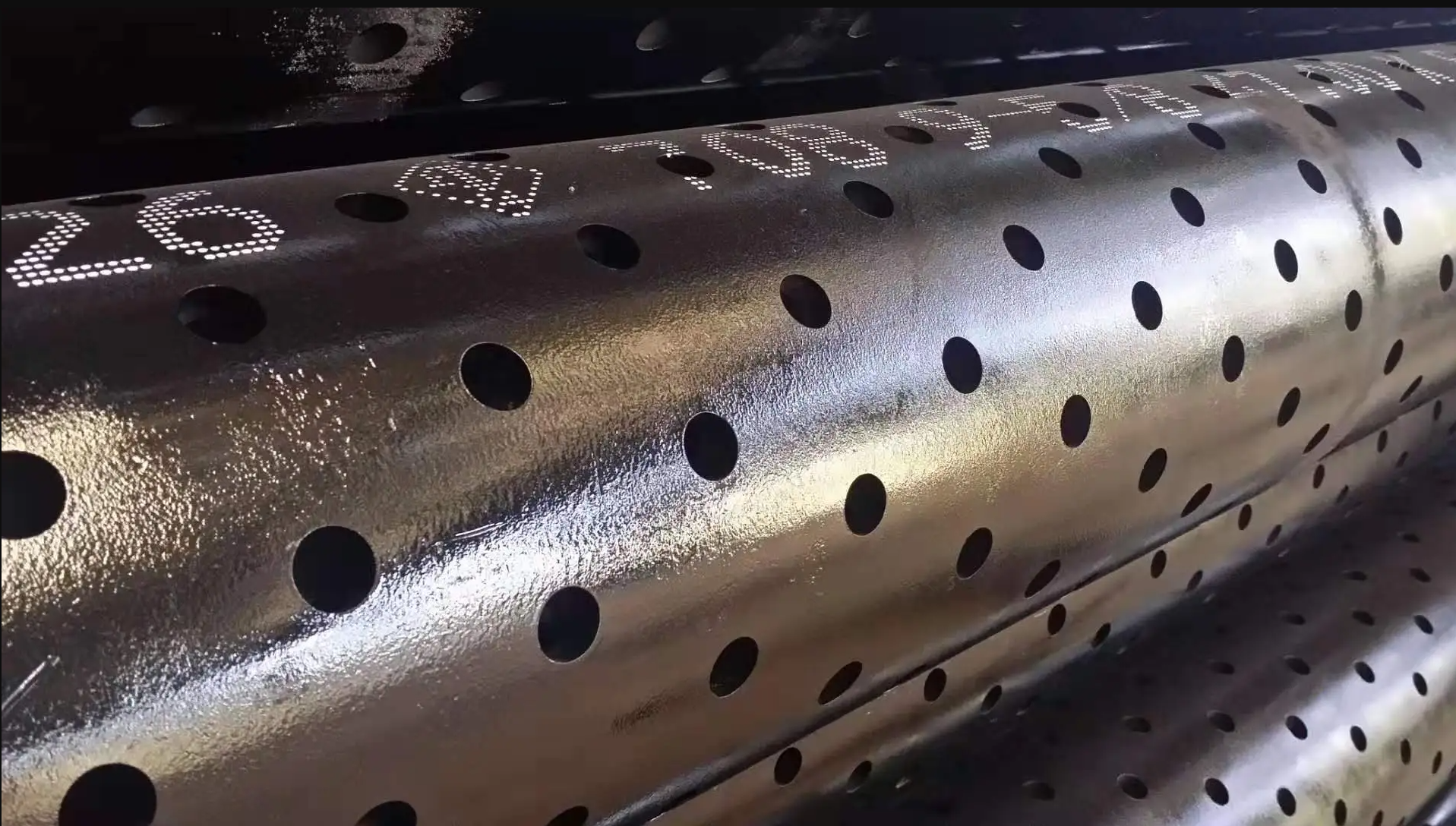
spiral welded slotted liner for sand control

Our company, in collaboration with relevant research institutions, has developed a series of petrochemical filtration filter products: oil sand filter screens (sand filter blocks), spiral welded stainless steel filter tubes (spiral welded tubes), and straight seam welded stainless steel filter tubes, which have been well received by oilfield customers.

Product performance and features:

  • Spiral welded pipe
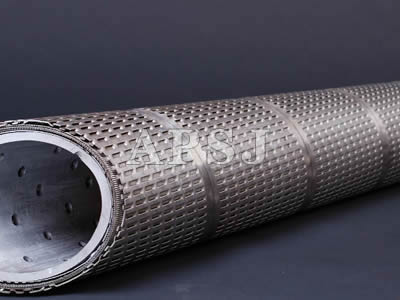
    The perforated seams are welded into straight lines; spiral welding forms a unique spiral distribution, resulting in greater filtration strength. When certain parts are squeezed from the outside, under external pressure, the stressed parts will have reduced or closed gaps, ensuring reliable sand protection. Manufactured using advanced technology, the stainless steel filter glove has side openings, reducing direct corrosion of the perforated welded sand pipe. The seam gap is within the processing range of 20 mm to 0.7 mm. The uniform opening ensures that the processing difference is within the allowable error range of 0.015 mm, also guaranteeing its filtration accuracy requirements. Utilizing high-precision perforation technology, the effective slot length is three to five times that of ordinary slotted pipes and two to three times that of ordinary perforated slotted pipes.
  • The central tube has a unique spiral pattern.
    The central tube features a high-precision perforated design with standard oil and glove tubes. The spiral perforation of the central tube reduces the opening area of ​​the tube cross-section while maximizing the strength of the central tube. When oil, gas, or water passes through the perforated openings and then enters the screen, sand is blocked outside the perforated screen.
  • Excellent corrosion resistance
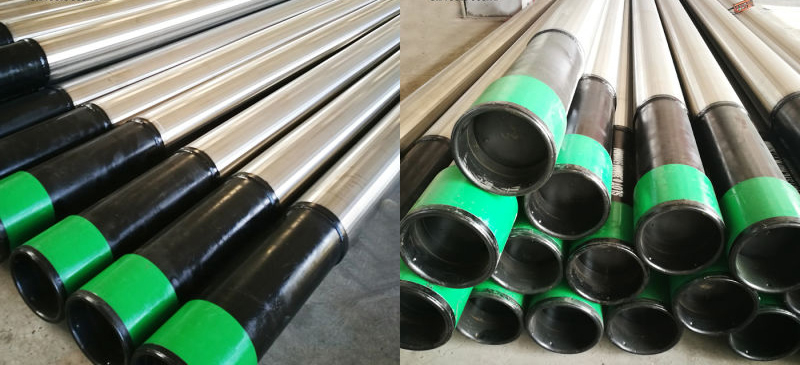
    The center tube is an API standard tube or oil tube, and the high-precision perforated filter gloves are made of 304 stainless steel.
    For wells containing H₂O, S, CO₂, or high Cl₂ with special requirements, the center tube can be corrosion-resistant casing or tubing. The screen is resistant to acids, alkalis, and salt corrosion.
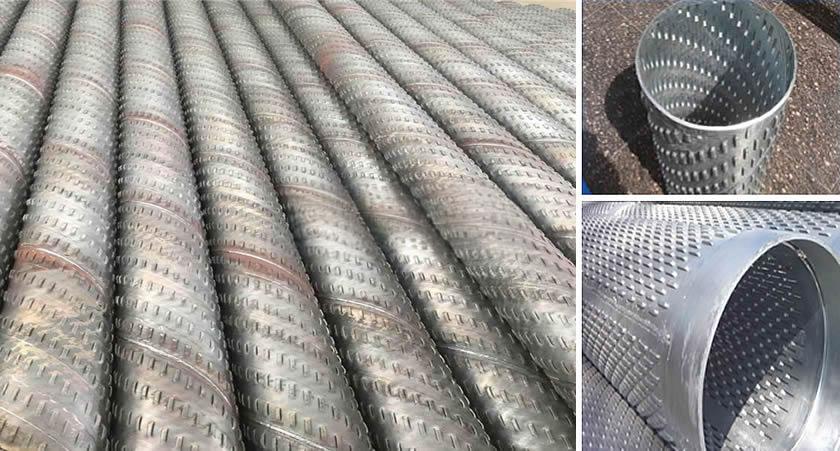
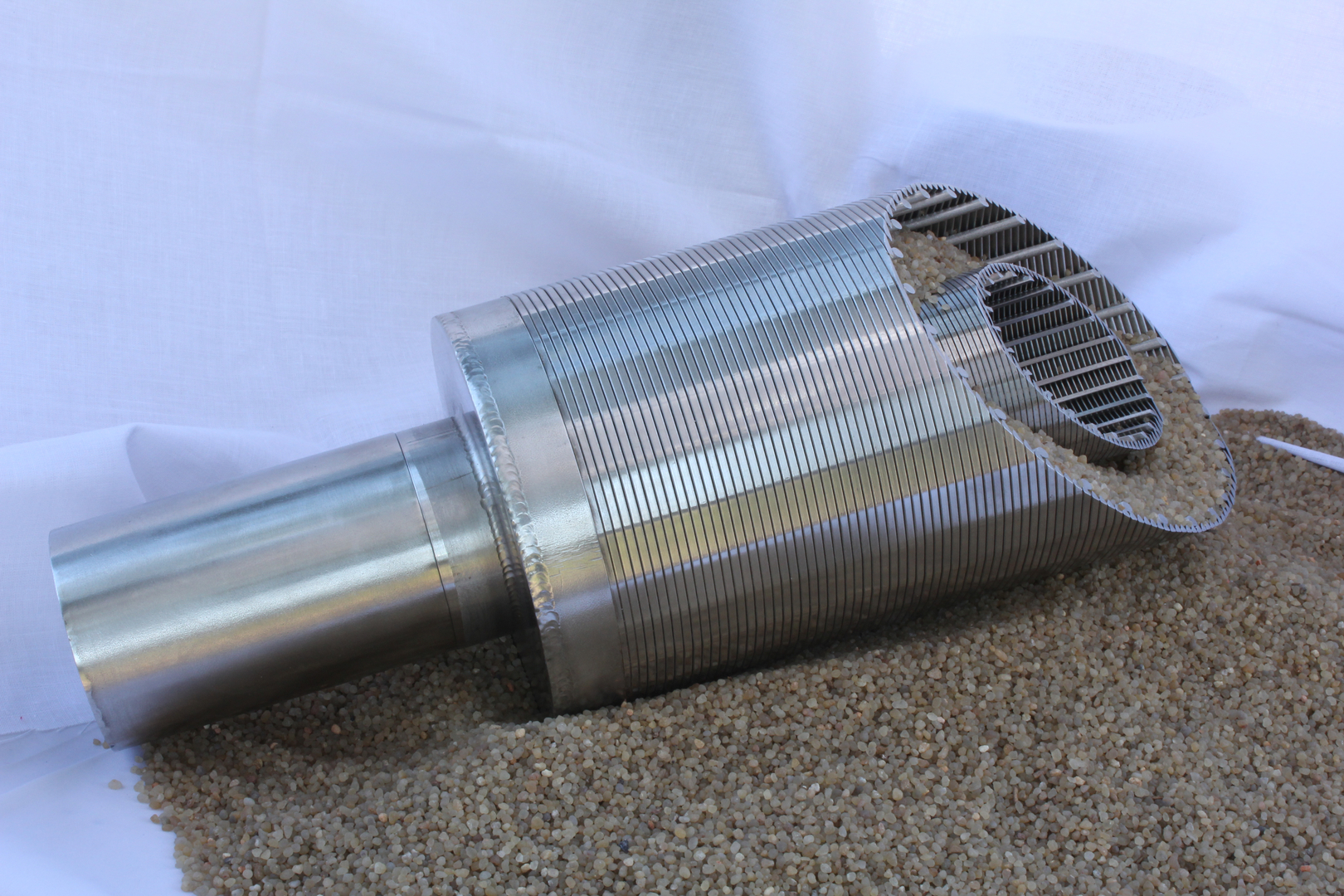
The composite graded sand control screen tube employs a unique graded sand control system, combining surface filtration and depth filtration to achieve dual precision. This represents a new breakthrough in mechanical sand control design. It offers high permeability, high strength, high deformation resistance, high reliability, and excellent corrosion resistance, making it the most effective sand control product currently available.
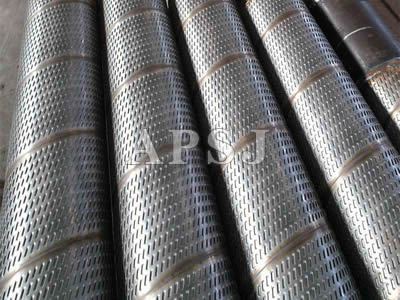
       

Product performance and features:

  • Uniquely designed filter ring
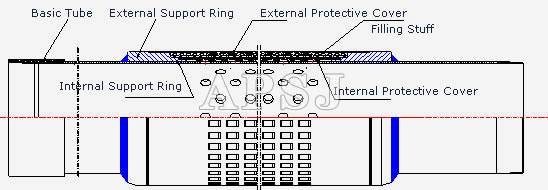
    The graded sand control filter and the outer protective cover are welded to the side ring as a single unit. The number of welds between the filter structure and the central tube is reduced to a minimum, thus greatly reducing the impact of welding on the sand strength.
  • External protective cover with side opening (optional)
    During transportation, the protective cover can protect the sand-proof filter layer from being punctured or damaged during the well entry process.
    In oil and gas well production, its use can effectively prevent fluids from directly eroding and damaging the graded sand filter layer, and extend the service life of the screen pipe.
  • The central tube has a unique spiral pattern.
    The central tube features a high-precision perforated design with standard oil and glove tubes. The spiral perforation of the central tube reduces the opening area of ​​the tube cross-section while maximizing the strength of the central tube. When oil, gas, or water passes through the perforated openings and then enters the screen, sand is blocked outside the perforated screen.
  • Easy to install and requires minimal working time.
    With its small outer diameter and light weight, it is easy to move horizontally over long distances.
     

Scope of application products
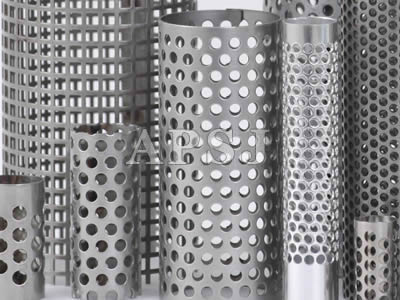
Sand control screens can be used in vertical wells, inclined wells, horizontal wells, and various gas, oil, and water wells. They can be used alone as sand control pipes or in conjunction with packing material.

From the inside out, the screen is made of a composite sand filter kit, a stainless steel protective kit, and other components. The base tube is an API sleeve or oil pipe, and the sand filter is a stainless steel precision porous filter composite material, with an integral welded structure. This new type of sand filter screen features high permeability, high strength, high deformation resistance, high reliability, and good corrosion resistance, exhibiting excellent performance. This is the result of a highly efficient mechanical sand control technology. It is also our patented product.
 

Water well screen pipe | Sand Control Screen

  The water well screen is an important component of a well that allows water to flow into the well while preventing sediment and other debris from entering. The screen is typically located at the bottom of the well, near the aquifer. This is done to ensure that only clean water is collected and that any sediment or dirt is filtered out. The screen is typically made from a perforated pipe or other type of material that has small openings to allow water to pass through while blocking sediments from entering. Abter well screen is manufactured with a continuous v-shaped slot to reduce the entrance velocity of water and encrustation rates. Besides, Filson well screen has a large surface area without clogging, thus provide superior filtration performance. Well screen slot size selection is a critical step, typically based on the particle size analysis of the formation sample. With the standard slot size range from 0.005” to 0.5”, Filson well screen can control sand particles and silt from the well perfectly.   Advantages of Water Well Screens 1. The V-shape section plane of water well screens creates the continuous slot, which can avoid blockage and make sure of the unimpeded water. Read more

Geothermal Pipe Based Screen | Sand Free Pipe Based Well Screen

PARAMETER Geothermal Pipe based well screen specification: Nominal Diameter Pipe OD(mm) Weight lb/ftW.T[mm] Hole size In Holes per foot Total Areaofholes in2/ft Screen OD (in) 2-3/8 60 4.6[4.83] 3/8 96 10.60 2.86 2-7/8 73 6.4[5.51] 3/8 108 11.93 3.38 3-1/2 88.9 9.2[6.45] 1/2 108 21.21 4.06 4 101.6 9.5[5.74] 1/2 120 23.56 4.55 4-1/2 114.3 11.6[6.35] 1/2 144 28.27 5.08 5 127 13[6.43] 1/2 156 30.63 5.62 5-1/2 139.7 15.5[6.99] 1/2 168 32.99 6.08 6-5/8 168.3 24[8.94] 1/2 180 35.34 7.12 7 177.8 23[8.05] 5/8 136 42.16 7.58 7-5/8 194 26.4[8.33] 5/8 148 45.88 8.20 8-5/8 219 32[8.94] 5/8 168 51.08 9.24 9-5/8 244.5 36[8.94] 5/8 188 58.28 10.18 10-3/4 273 45.5[10.16] 5/8 209 64.79 11.36 13-3/8 339.7 54.5[9.65] 5/8 260 80.60 14.04 What is Geothermal Well Screen? Geothermal well screens are an essential component of a geothermal well system. They are used to filter and protect the geothermal well from debris and other contaminants that can be harmful to the system. Sand Control Screens are designed to be durable and reliable, providing long-term protection for the well. The geothermal well screen is a cylindrical tube made of a perforated metal or plastic material. The perforations are designed to allow Read more

Pre-packed well screen | Wire Wrapped Pre Packed Sand Screen

Pre Packed Sand Screen contains perforated base pipe, inner and outer screen jackets and graded sand between the jackets. It is a modification of wire wrapped screen which is used in well sorted sand or stand-alone completion. Graded sand, with or without resin coating, is considered as a filter for reservoir particles. Wire wrapped pre Pre Packed Sand Screen is used in wells where conventional gravel packing is not feasible or economical. The thickness of gravel layer can be varied to meet special requirement. What Is the Function of Gravel Pack? Gravel packing is one of popular sand-control technique used in oil, water and gas wells. It stabilizes the borehole and filters the sand from the flow, only allowing very fine particles in. Pre Packed Sand Screen wire wrapped sand screen brings it into full play in maximizing production as well as controlling the sand.   Diameter: 168mm Material: stainless steel,carbon steel,etc Slot: 0.2mm End Connection: thread,coupling,etc thickness: 10mm Pre Packed Sand Screen PRODUCT SPECIFICATIONS Base Pipe Gravel Pack Perforations Screen OD (in.) ID (in.) Weight (lbs.) Coupling OD (in.) Thickness (in.) Size (in.) Holes/ft. OD (in.) Cylinder Area (sq. in./ft) 006 GA Inlet Area (sq. in./ft) 1.9 1.61 2.75 Read more

Well Screen Oil Casing , Pipe Based ,Sand Control,API 5CT

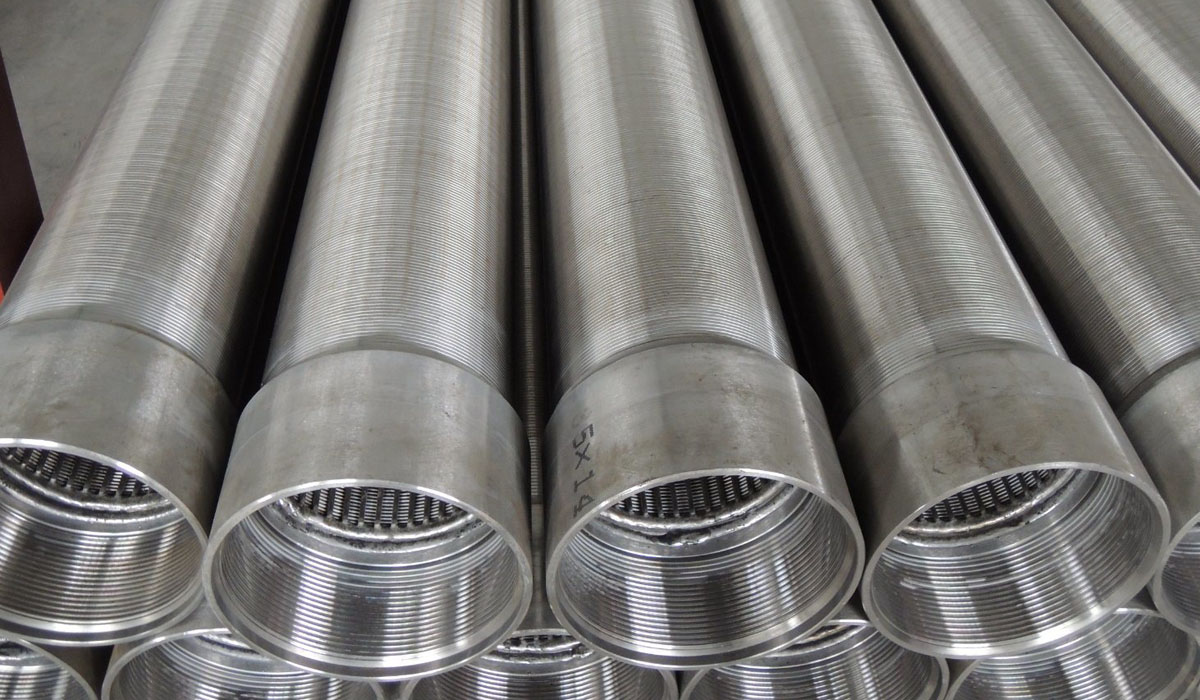
1. Grade: SUS 304 SUS304L, SUS316, SUS316L, or carbon steel 2. Slot Size: 0.02mm~15mm 3. Standard: DIN AISI ASTM 4. Certification: ISO9001, API 5CT 5.Pipe based well screens consist of base pipe,all-welded wedge wire screen and supporting rod.The base pipe is perforated or slotted API casing pipe,the base pipe can be stainless steel or carbon steel API 5CT casing.The all-welded wedge wire screens are welded together with base pipe by supporting rod. 6.Features of Pipe Based Well Screens: 1)Higher filtering accuracy: all-welded wedge wire screens as screen jacket with vee opening design makes the filtering accuracy higher,which can control sand better. 2)Excellent strength and resistance to deformation: The base pipe inside,the outside can be protected with the protection jacket added according to requirements,the integrated strength of the perforated base pipe only decreases 2~3% compared with the standard casing/oil tubing,so the pipe based well screens have enough integrated strength to resist to the pressure caused by strata.Even if some part of the well screens deformed,the slot of this part will not be widened,which makes higher sand controlreliability 3)More choices: the material of screen jacket can be stainless steel or carbon steel,the material can be chosen as per customers'requirement. 4)The smaller slot Read more

Slotted Casing Pipe | Slotted Liner Well Screen – API 5CT
Slotted Liner pipe

  1. Introduction of Slotted Casing Pipe Casing pipe is a large-diameter pipe that serves as the structural retainer for the walls of oil and gas wells, or well bore. It is inserted into a well bore and cemented in place to protect both subsurface formations and the wellbore from collapsing and to allow drilling fluid to circulate and extraction to take place. Slotted casing pipe is a type of casing pipe that has slots machined into its surface. These slots are used to help control the flow of water, oil, and gas in a well bore. The slotted casing pipe is designed to allow water, oil, and gas to flow through the slots while preventing sand and other debris from entering the well bore. Slotted casing pipe is commonly used in oil and gas wells, water wells, and geothermal wells. 2. Types of Slotted Casing Pipe There are two main types of slotted casing pipe: open slot and perforated slot. Open slot casing pipe has slots that are cut into the surface of the pipe in a straight line. These slots are usually spaced evenly apart and are typically about 1/4 inch wide and 1/4 inch deep. Perforated slot Read more

Perforated Casing Pipe | Perforated Well Screen Piping

Applications of Perforated Pipe: Perforated well screen is a type of filter used in oil and gas wells. It is designed to control the flow of oil and gas from the well, while preventing sand and other debris from entering the well. perforation in the context of oil wells refers to a hole punched in the casing or liner of an oil well to connect it to the reservoir. Creating a channel between the pay zone and the wellbore to cause oil and gas to flow to the wellbore easily. In cased hole completions, the well will be drilled down past the section of the formation desired for production and will have casing or a liner run in separating the formation from the well bore. The final stage of the completion will involve running in perforating guns, a string of shaped charges, down to the desired depth and firing them to perforate the casing or liner. A typical perforating gun can carry many dozens of explosive charges. Commonly, perforation guns are run on E-line as it is traditional to use electrical signals from the surface to fire the guns. In more highly deviated wells, coiled tubingmay be used. Newer technologies Read more

Leave a Reply